

National Cancer Survivor Month
National Cancer Survivors Day is an annual celebration held on June to honor cancer survivors, raise awareness of the challenges they face, and promote efforts to improve their quality of life. It is a day to recognize the strength and courage of those who have been diagnosed with cancer, celebrate their journey, and support the ongoing efforts in cancer treatment and survivorship care. The day also provides an opportunity for survivors to connect with each other, share their experiences, and offer hope and support. #hipecdubai #parotiddubai #colorectalsurgerydubai #bestoncologyuae #bestbrestsurgerydubai #parathyroidsurgerydubai #thyroiddubai #bestsurgeondubai #oncoplasticbreastsurgerydubai #bestfistulasurgeonuae #bestrefluxsurgeryuae
CARE & FEAR OF CANCER PRIENT
Caring for a cancer patient involves addressing both their physical and emotional needs, with a significant focus on managing fear and anxiety. Here are key aspects to consider: Physical Care: 1. Medical Treatment Compliance: • Ensure the patient adheres to prescribed treatments (chemotherapy, radiation, medications). • Keep track of appointments and facilitate transportation if needed. 2. Symptom Management: • Monitor for and manage symptoms like pain, nausea, fatigue, and loss of appetite. • Collaborate with healthcare providers to adjust treatments and medications as necessary. 3. Nutrition and Hydration: • Provide balanced, nutritious meals tailored to the patient’s taste and tolerances. • Encourage small, frequent meals if the patient has a reduced appetite. 4. Hygiene and Comfort: • Assist with personal hygiene to maintain cleanliness and prevent infections. • Ensure a comfortable living environment, adjusting room temperature, lighting, and noise levels to the patient’s preference. Emotional Care: 1. Communication: • Foster open and honest communication. Encourage the patient to express their fears, concerns, and needs. • Listen actively and empathetically without judgment. 2. Psychological Support: • Facilitate access to professional counseling or support groups. • Provide emotional reassurance and companionship to combat feelings of isolation. 3. Education and Information: • Educate the patient about their condition, treatment options, and potential side effects. • Help them understand the importance of their treatment plan and what to expect, which can reduce anxiety. 4. Stress Reduction Techniques: • Encourage practices such as meditation, deep breathing exercises, and gentle physical activities like walking or yoga. • Engage in enjoyable activities and hobbies to distract from the illness and improve mood. Managing Fear: 1. Validation and Understanding: • Acknowledge the patient’s fears as valid and normal. Avoid minimizing their feelings. • Provide a safe space for them to talk about their fears and concerns. 2. Information and Involvement: • Involve the patient in decision-making processes regarding their treatment to give them a sense of control. • Provide clear, understandable information about their diagnosis and treatment to demystify the process. 3. Professional Support: • Encourage discussions with oncologists, counselors, or psychiatrists who can provide professional insight and support. • Support groups can connect patients with others undergoing similar experiences, offering mutual support and shared coping strategies. 4. Spiritual and Holistic Care: • If the patient has spiritual or religious beliefs, encourage practices that provide comfort and strength. • Explore holistic approaches like acupuncture, massage therapy, and aromatherapy, which can complement conventional treatment and provide additional comfort. By addressing both the physical and emotional aspects of care, caregivers can significantly improve the quality of life for cancer patients, helping them navigate their journey with dignity and as little distress as possible. #SleeveSurgerydubai #SleeveSurgeryUAE #SleeveSurgerymena #BypassSurgerydubai #BypasssurgeryUae #BypasssurgeryAbudhabi #Gastricballoondubai #Stomachballondubai #StomachbandUae #Stomachbanddubai #Weightlossdubai #Weightwatchdubai #Endoscopicsleevedubai #Laparoscopicherniadubai #Hiatusherniadubai #Hemorrhoidsurgerydubai #Refluxdiseasedubai #Bestanorectalsurgeondubai #Proctologydubai #Bestbariatricsurgeondubai #Diabeticsurgerydubai #Metabolicsurgerydubai #Lasersurgerydubai #Stomachdiseasesdubai #Colonpolypsdubai
Cancer Management
Cancer management involves a comprehensive approach tailored to each patient’s specific type and stage of cancer. It typically includes a combination of treatments such as surgery, chemotherapy, radiation therapy, immunotherapy, targeted therapy, and sometimes hormone therapy or stem cell transplant. The goal is to effectively remove or destroy cancer cells while minimizing damage to healthy tissue and organs. Additionally, supportive care measures like pain management, nutritional support, and psychosocial support are vital for patients to cope with treatment side effects and maintain their quality of life. Regular monitoring and follow-up are also essential to track progress and address any recurrence or complications. #hipecdubai #parotiddubai #colorectalsurgerydubai #bestoncologyuae #bestbrestsurgerydubai
BLADDER CANCER AWARENESS
Bladder cancer awareness is crucial for early detection and treatment. Knowing the risk factors, symptoms, and regular check-ups can help in early diagnosis and better outcomes. If you need more information or resources on bladder cancer awareness, feel free to ask! Dr Sadir Alrawi and Team #bestoncologyhospitaluae #bestoncologycenteruae #bestbrestsurgeryuae
Head And Neck Cancer
Head and neck cancer refers to a group of cancers that occur in the head and neck region, including the oral cavity, throat (pharynx), voice box (larynx), sinuses, and nose. These cancers can develop in various tissues, including the mucosal surfaces lining these areas, the salivary glands, and the lymph nodes of the neck. Some key points about head and neck cancer include: 1. Risk Factors: Tobacco use (smoking or chewing), alcohol consumption, human papillomavirus (HPV) infection, poor oral hygiene, and exposure to certain chemicals or radiation are common risk factors. 2. Symptoms: Symptoms can vary depending on the location of the cancer but may include persistent sore throat, difficulty swallowing, a lump or sore that doesn’t heal, changes in voice, persistent ear pain, and unexplained weight loss. 3. Diagnosis: Diagnosis often involves a combination of physical examination, imaging tests (such as CT scans, MRI scans, or PET scans), and tissue biopsy to confirm the presence of cancer and determine its type and stage. 4. Treatment: Treatment for head and neck cancer depends on factors such as the location, stage, and extent of the disease. Options may include surgery, radiation therapy, chemotherapy, targeted therapy, and immunotherapy. Treatment plans are often multidisciplinary, involving a team of specialists. 5. Prognosis: Prognosis can vary widely depending on factors such as the stage of cancer at diagnosis, the type of cancer, overall health, and response to treatment. Early detection and prompt treatment can improve outcomes. 6. Supportive Care: Managing symptoms and side effects of treatment is an essential part of care for head and neck cancer patients. This may include nutritional support, pain management, speech therapy, and psychosocial support. 7. Prevention: Quitting smoking, limiting alcohol consumption, practicing good oral hygiene, and receiving the HPV vaccine can reduce the risk of developing head and neck cancer. As with any cancer, early detection, timely treatment, and ongoing support are crucial for optimizing outcomes and quality of life for individuals diagnosed with head and neck cancer. #cancercaremiddleeast #bestcancercentreuae #headandnecksurgeonuae
MELANOMA
Melanoma is a type of skin cancer that develops from melanocytes, the cells that produce melanin, the pigment responsible for skin color. It can occur anywhere on the body, including areas not exposed to the sun. Melanoma is often caused by exposure to ultraviolet (UV) radiation from sunlight or tanning beds, as well as genetic factors. Warning signs of melanoma include changes in the size, shape, or color of a mole or spot on the skin, as well as the appearance of a new mole or spot. The ABCDE rule can help identify potential signs of melanoma: Asymmetry, Border irregularity, Color variation, Diameter larger than a pencil eraser, and Evolving changes in size, shape, or color. Early detection is crucial for successful treatment of melanoma. Treatment options may include surgical removal of the melanoma, lymph node biopsy, chemotherapy, radiation therapy, targeted therapy, and immunotherapy. Regular skin checks, sun protection measures, and avoiding tanning beds can help prevent melanoma. It’s important to promptly report any changes in moles or new skin growths to a healthcare provider for evaluation. #melanomadubai #cancercentredubai #bestsurgeonuae
CYBER KNIFE TREATMENT IN DUBAI
CyberKnife is a type of radiation therapy used to treat tumors, including brain tumors, spinal tumors, prostate cancer, lung cancer, liver cancer, and other conditions. Unlike traditional radiation therapy, CyberKnife delivers highly targeted radiation beams from multiple angles, using advanced imaging and robotic technology to precisely track and adjust for the tumor’s movement in real-time, even during breathing or slight patient movement. This approach allows for higher doses of radiation to be delivered to the tumor while minimizing damage to surrounding healthy tissue. CyberKnife treatment typically involves a few sessions, often completed within a week, and is considered an outpatient procedure, meaning patients can return home shortly after each session. CyberKnife is known for its accuracy, effectiveness, and reduced side effects compared to traditional radiation therapy. It can be used as a primary treatment or in combination with other therapies, depending on the specific type and location of the tumor and the patient’s overall health. As with any medical treatment, the suitability of CyberKnife therapy is determined on a case-by-case basis by a multidisciplinary team of healthcare professionals. #cyberknifeuae #cancercentredubai #radiationoncologydubai
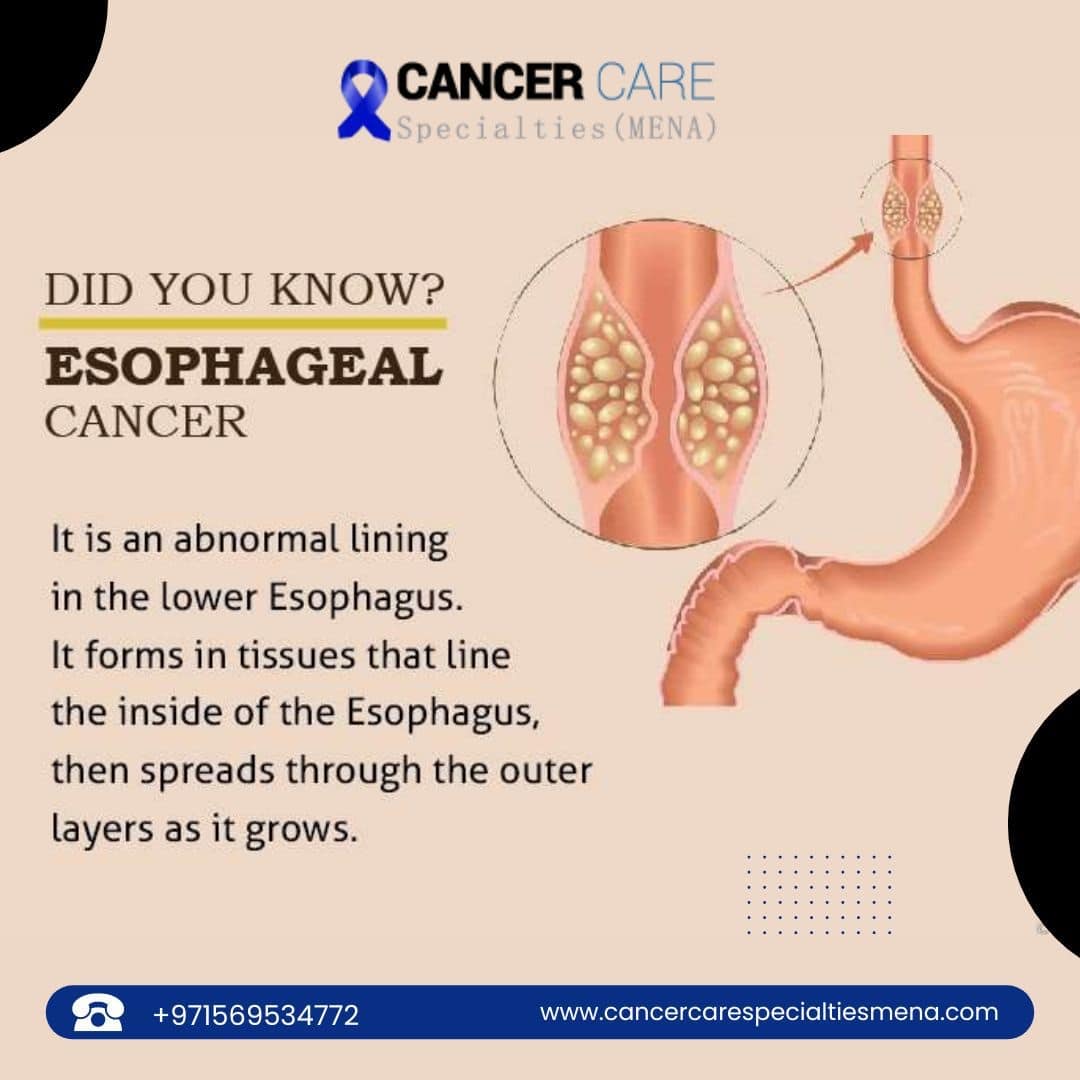
ESOPHAGEAL CANCER
Esophageal cancer is a type of cancer that develops in the esophagus, the muscular tube that connects the throat to the stomach. There are two main types of esophageal cancer: squamous cell carcinoma and adenocarcinoma. 1. Squamous Cell Carcinoma: This type of esophageal cancer typically starts in the cells lining the esophagus. It is often associated with factors such as smoking, heavy alcohol consumption, and a history of acid reflux or gastroesophageal reflux disease (GERD). 2. Adenocarcinoma: Adenocarcinoma of the esophagus usually develops in the glandular cells in the lower part of the esophagus. It is often linked to risk factors such as obesity, gastroesophageal reflux disease (GERD), Barrett’s esophagus (a condition where the cells lining the lower esophagus change), and smoking. Symptoms of esophageal cancer may include: • Difficulty swallowing (dysphagia) • Unintentional weight loss • Chest pain or discomfort, especially when swallowing • Indigestion or heartburn that doesn’t go away • Persistent cough or hoarseness • Frequent vomiting • Regurgitation of food or blood • Fatigue Treatment for esophageal cancer depends on various factors, including the stage of the cancer, the location of the tumor, the overall health of the patient, and their preferences. Treatment options may include surgery, chemotherapy, radiation therapy, targeted therapy, immunotherapy, or a combination of these approaches. Early detection and treatment can improve outcomes for individuals with esophageal cancer. Screening tests such as endoscopy or imaging studies may be recommended for individuals at higher risk or experiencing symptoms suggestive of esophageal cancer. It’s essential to consult with a healthcare provider for proper evaluation and management if you have concerns about esophageal cancer or are experiencing symptoms. #esophagealcanceruae #oncologysurgeandubai #cancercareuae
HIPEC VS PIPAC
Hipec and Pipac are both treatments used in oncology, but they are quite different in terms of application and purpose. 1. HIPEC (Hyperthermic Intraperitoneal Chemotherapy): HIPEC is a procedure used to treat advanced abdominal cancers, particularly those that have spread within the abdomen. During HIPEC, heated chemotherapy drugs are circulated throughout the abdomen after the visible tumors have been removed through surgery. The goal is to kill any remaining cancer cells and prevent recurrence. 2. PIPAC (Pressurized Intraperitoneal Aerosol Chemotherapy): PIPAC is a newer technique that involves delivering chemotherapy drugs directly into the abdominal cavity in the form of an aerosol under pressure. This is done through laparoscopic surgery. PIPAC is typically used for peritoneal metastases, which are cancerous spread to the lining of the abdominal cavity. In summary, HIPEC is used after surgical removal of visible tumors to kill remaining cancer cells, while PIPAC is a minimally invasive technique for delivering chemotherapy directly into the abdominal cavity for peritoneal metastases. Each has its own indications and considerations based on the patient’s condition and the type of cancer being treated. #hipecdubai #pipacdubai #bestoncologysurgeonuae
LIVER CANCER
Raising awareness about the vital role of the Liver Primary liver cancer is a disease in which malignant (cancer) cells form in the tissues of the liver. Cancer that forms in other parts of the body and spreads to the liver is not primary liver cancer. The liver is one of the largest organs in the body. It has two lobes and fills the upper right side of the abdomen inside the rib cage. The main functions of the liver include the following: to make bile to help digest fat that comes from food to store glycogen (sugar), which the body uses for energy to filter harmful substances from the blood so they can be passed from the body in stools and urine Signs and symptoms of liver cancer These and other signs and symptoms may be caused by adult primary liver cancer or by other conditions. Check with your doctor if you have any of the following: a hard lump on the right side just below the rib cage discomfort in the upper abdomen on the right side a swollen abdomen pain near the right shoulder blade or in the back jaundice (yellowing of the skin and whites of the eyes) easy bruising or bleeding unusual tiredness or weakness nausea and vomiting loss of appetite or feelings of fullness after eating a small meal weight loss for no known reason pale, chalky bowel movements and dark urine fever
Latest News
-

-

-

-

Prostate Cancer Survivor Stories That Inspire Hope
09 Jul, 2026 -

Seminar & Events
-

Baghdad clinic
30 Sep, 2024 -

Saudi German Hospital
26 Sep, 2024 -
Oncology Program
16 Sep, 2024 -

Oncology marketing
06 Sep, 2024 -
CAR-T THERAPY
14 Aug, 2024