
Future of Cancer Care in the Middle East: Expertise, Innovation and Compassion
- Home
- Health Tips
- The Future of Cancer Care in the Middle East: Expertise, Innovation and Compassion
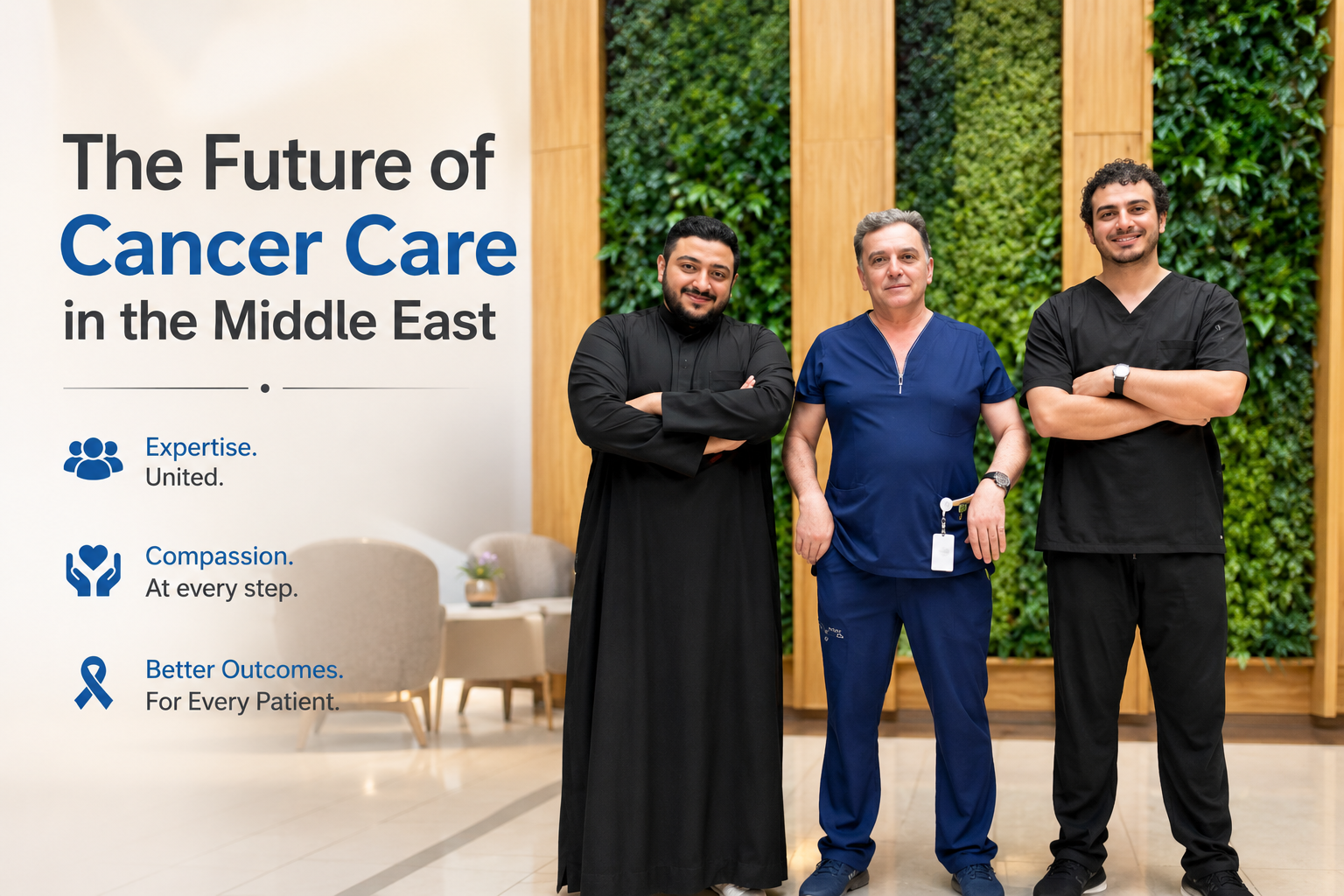
Cancer care is changing rapidly, and the Middle East is becoming an important part of that progress. The future of cancer treatment is not only about advanced technology. It is also about bringing experienced specialists together, understanding each patient’s needs, and making high quality care more accessible across the region.
The image reflects this vision beautifully. Three healthcare professionals standing together represent something that is essential in modern oncology: teamwork. Behind every successful cancer treatment journey is a group of people working together with a shared goal of providing the best possible care.
At Cancer Care Specialties MENA, the focus is on specialist cancer care across the UAE and the wider Middle East, with services covering several areas of oncology and surgical treatment. (Cancer Care Center UAE)
A New Era of Cancer Care in the Middle East
Cancer treatment has come a long way. Earlier, cancer care was often focused on treating the disease with one main method. Today, treatment can involve surgery, chemotherapy, radiation therapy, immunotherapy, targeted treatment and other specialised approaches depending on the patient’s diagnosis.
This progress means that patients need access to specialists who understand different types of cancer and can work together to create a suitable treatment plan.
The Middle East has seen growing investment in healthcare, medical technology and specialist services. Countries such as the UAE are becoming important destinations for patients seeking advanced medical care. Dubai and Abu Dhabi, in particular, have developed strong healthcare infrastructure and specialist medical services.
The future is about building on this progress while keeping the patient at the centre of every decision.
The Importance of a Multidisciplinary Cancer Team
Cancer is complex, and one specialist may not always be able to address every part of a patient’s treatment journey.
A multidisciplinary cancer team brings together professionals from different areas of medicine. Depending on the patient’s condition, this may include surgical oncologists, medical oncologists, radiation oncologists, radiologists, pathologists and other specialists.
Working as a team allows doctors to review the diagnosis from different perspectives. They can discuss test results, imaging, biopsy reports and treatment options before deciding on the most appropriate approach.
Cancer Care Specialties MENA highlights multidisciplinary care across its specialised oncology services, including breast, colorectal, hepatobiliary and pancreatic, thoracic, gynecological, head and neck, uro oncology and other cancer centres.
This team based approach can make treatment planning more organised and personalised.
Technology and Expertise Working Together
Technology plays an important role in the future of cancer care. Modern imaging, minimally invasive surgical techniques, advanced diagnostic methods and newer cancer medicines can give specialists more options when planning treatment.
However, technology alone is not enough.
The experience of the medical team matters just as much. Doctors need to understand when a particular technology or treatment is appropriate and how it fits into the patient’s overall care plan.
The combination of medical expertise and modern technology can help specialists approach complex cancer cases with greater precision and confidence.
Personalised Treatment for Every Patient
No two cancer patients are exactly alike.
Even when two people are diagnosed with the same type of cancer, their treatment plans may be different. Age, overall health, tumour location, cancer stage, previous treatment and individual circumstances can all influence medical decisions.
Personalised cancer care starts with listening to the patient and understanding the complete medical history.
A specialist consultation may involve reviewing previous scans, pathology reports, laboratory results and treatment records. Doctors can then explain the available options in clear language and discuss the potential benefits and risks of each approach.
Cancer Care Specialties MENA also emphasises personalised treatment planning and specialist consultations as part of its approach to cancer care.
The Growing Role of Surgical Oncology
Surgery continues to be an important part of treatment for many solid cancers. Advances in surgical oncology have made it possible to approach complex procedures with greater planning and precision.
Depending on the type of cancer, specialists may use open surgery, laparoscopic techniques, minimally invasive procedures or other advanced approaches.
The goal is not simply to remove a tumour. The wider aim is to provide effective cancer treatment while considering recovery, function and quality of life.
Specialised surgical teams can be particularly important for complex cancers involving organs such as the liver, pancreas, bowel, stomach, lungs, breast and other parts of the body.
Care That Extends Beyond Treatment
Cancer care is more than surgery, chemotherapy or radiation therapy.
Patients and families often need guidance throughout the entire treatment journey. They may have questions about diagnosis, treatment choices, recovery, follow up appointments and what to expect next.
Clear communication can make a major difference.
Patients should feel comfortable asking questions and discussing their concerns with their medical team. Understanding the treatment plan can help patients and families feel more prepared and involved in important healthcare decisions.
Follow up care is also an important part of the journey. After treatment, regular appointments may help doctors monitor recovery and identify concerns that require further assessment.
Making Specialist Cancer Care More Accessible
One of the most important goals for the future is making specialist cancer care easier to access.
Patients should not always have to travel far from home to find experienced cancer specialists. Developing specialist centres and collaborative healthcare networks across the UAE and the wider MENA region can help patients receive care closer to where they live.
Cancer Care Specialties MENA operates with a regional focus and lists cancer care services and affiliated centres across locations including Dubai, Abu Dhabi and other parts of the Middle East.
This regional approach can support patients who need specialist opinions, complex treatment planning or multidisciplinary cancer care.
The Human Side of Cancer Care
While medical technology continues to advance, compassion will always remain an important part of cancer treatment.
A cancer diagnosis can affect the entire family. Patients may experience uncertainty, fear and many questions about the future. Having a healthcare team that listens, explains and supports them can make the treatment journey easier to navigate.
The people shown in the image represent this human side of healthcare. Their presence together reflects cooperation, trust and a shared commitment to patient care.
The future of oncology should combine medical innovation with empathy.
Second Opinions Can Bring Greater Confidence
When a major cancer treatment decision is being considered, patients may sometimes benefit from a second opinion.
A second opinion can provide another specialist assessment of the diagnosis and treatment options. It may help a patient understand whether surgery is appropriate, whether another treatment approach should be considered, or simply provide greater confidence before starting treatment.
Cancer Care Specialties MENA states that it offers second opinion services to help patients understand their options and make informed treatment decisions.
Seeking another opinion does not mean questioning the first doctor. It can simply be another step toward making an informed decision.
Looking Ahead
The future of cancer care in the Middle East is built on collaboration, specialist knowledge, modern technology and patient centred care.
As healthcare continues to develop across the UAE and MENA region, patients can look forward to more specialised services, better treatment coordination and increasingly personalised approaches to cancer management.
At Cancer Care Specialties MENA, the vision is to bring specialist oncology expertise together with a strong focus on individual patient needs. The goal is simple: to help patients and their families navigate cancer care with knowledge, confidence and support.
The image is more than a photograph of healthcare professionals standing together. It represents the idea that the future of cancer care is a shared effort. When specialists, technology and compassionate care come together, patients can receive a more complete approach to their cancer journey.
Frequently Asked Questions
1. What does modern cancer care involve?
Modern cancer care may include surgery, chemotherapy, radiation therapy, immunotherapy, targeted therapy and supportive care, depending on the patient’s diagnosis and treatment needs.
2. Why is a multidisciplinary cancer team important?
Different cancer specialists can contribute their expertise to diagnosis and treatment planning. This helps create a more complete and personalised approach.
3. Is personalised cancer treatment available in the UAE?
Yes. Specialist cancer centres in the UAE provide personalised treatment planning based on the patient’s cancer type, stage, medical history and overall health.
4. When should a patient consider a second opinion?
A second opinion can be useful when a patient has questions about a diagnosis, major surgery, chemotherapy, radiation therapy or other significant treatment decisions.
5. Where can patients seek specialist cancer care in the UAE?
Cancer Care Specialties MENA provides specialised oncology services across the UAE and the wider MENA region, with a focus on multidisciplinary and personalised cancer care.