
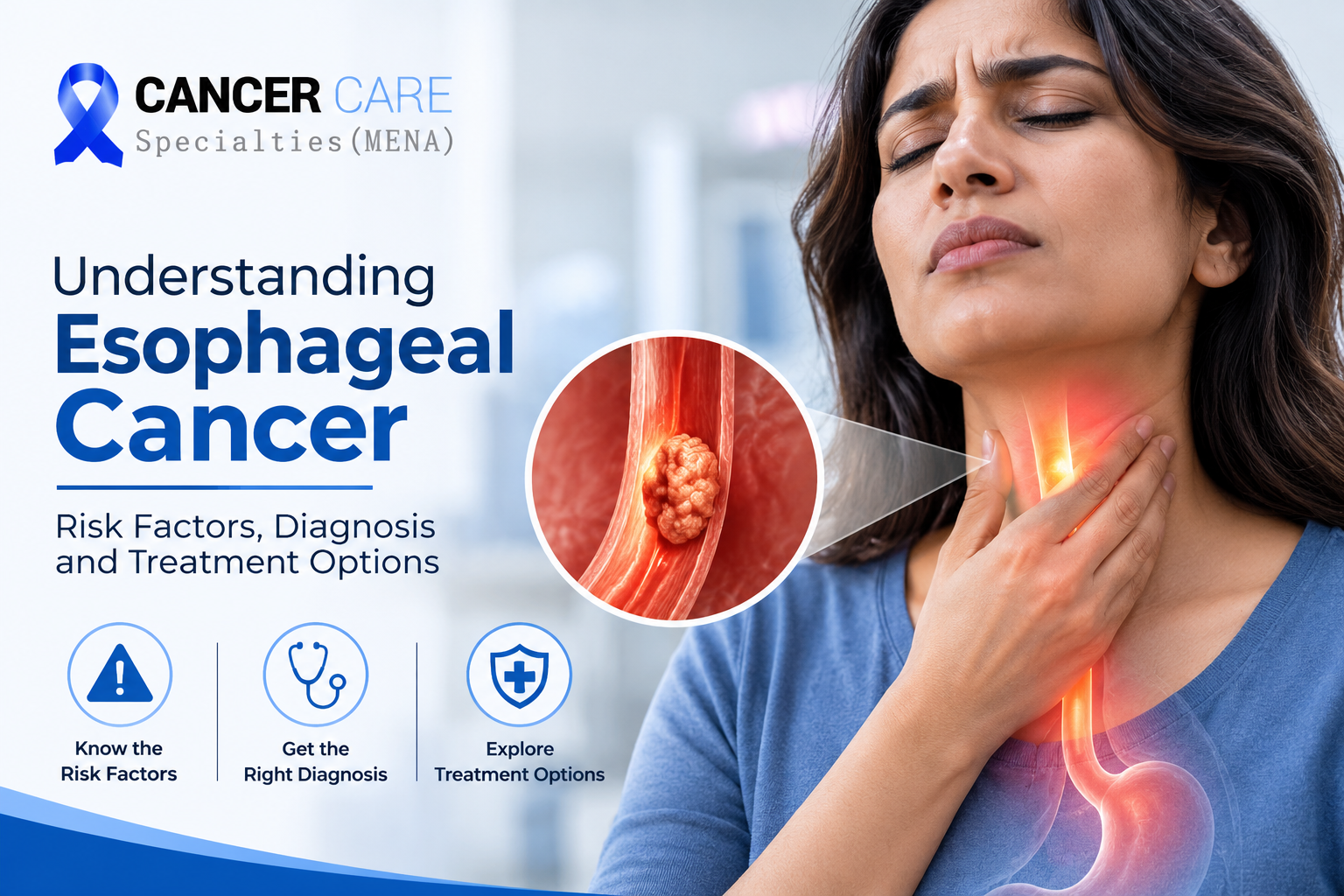
Understanding Esophageal Cancer: Risk Factors, Diagnosis and Treatment Options
Esophageal cancer develops in the esophagus, the muscular tube that carries food and liquids from the throat to the stomach. It can affect swallowing, nutrition, and overall health. Recognizing persistent symptoms and obtaining an accurate diagnosis are important steps toward appropriate treatment. Esophageal Cancer Treatment UAE depends on the cancer type, stage, location, and the patient’s overall health. Treatment may involve surgery, chemotherapy, radiation therapy, immunotherapy, or a combination of approaches. Understanding these options can help patients and families make informed decisions with their healthcare team. What Is Esophageal Cancer? Esophageal cancer develops when abnormal cells grow uncontrollably in the lining of the esophagus. The two main types are squamous cell carcinoma, which develops in the cells lining the esophagus, and adenocarcinoma, which often develops in the lower esophagus. Risk factors can include tobacco use, heavy alcohol consumption, chronic acid reflux, Barrett’s esophagus, and certain other medical conditions. Not everyone with these risk factors develops cancer, and the disease can also occur in people without obvious risk factors. An Esophageal Cancer Specialist Dubai can evaluate symptoms, review medical history, and recommend appropriate investigations when esophageal cancer is suspected. Common Symptoms and Risk Factors:- Symptoms may develop gradually and become more noticeable as the disease progresses. Difficulty swallowing is a particularly important symptom, especially when it becomes progressively worse. Common warning signs include: These symptoms can occur for several reasons other than cancer. However, persistent swallowing difficulties, unexplained weight loss, or worsening symptoms should be assessed promptly by a medical professional. How Is Esophageal Cancer Diagnosed? Esophageal Cancer Diagnosis Dubai may involve an upper gastrointestinal endoscopy, during which a flexible camera is used to examine the esophagus. If an abnormal area is found, a biopsy can be taken for laboratory examination. Additional tests may include CT scans, PET scans, endoscopic ultrasound, and other investigations to determine the tumor’s size and whether it has spread. Accurate staging helps doctors select the most appropriate treatment strategy. An Esophageal Cancer Specialist Dubai may coordinate these tests with radiologists, pathologists, and oncology professionals to develop an individualized care plan. Treatment Options for Esophageal Cancer:- Treatment depends on the cancer stage, tumor location, cell type, and the patient’s general condition. Early-stage cancers may sometimes be treated with endoscopic procedures or surgery, while more advanced disease may require a combination of treatments. Treatment option Potential role Surgery Removes the affected section of the esophagus in suitable patients Chemotherapy Uses medicines to treat cancer cells Radiation therapy Targets cancer with focused radiation Immunotherapy or targeted therapy May be suitable for selected cancers Esophageal Cancer Treatment UAE may include treatment before surgery to reduce the tumor or additional therapy afterward to improve disease control. Advanced cases may require systemic treatment to manage the disease and relieve symptoms. The Role of Esophageal Cancer Surgery:- Surgery may be recommended for selected patients when the cancer can be removed safely. An operation called an esophagectomy involves removing part or most of the affected esophagus and reconnecting the digestive tract. Esophageal Cancer Surgery UAE requires detailed planning because the procedure can affect swallowing, nutrition, and digestion. Patients should discuss the expected benefits, possible complications, recovery period, and alternative treatments with their surgical team. Nutrition support and rehabilitation can be important before and after surgery to help patients maintain strength and adjust to changes in eating. Specialized Esophageal Oncology Care:- Esophageal cancer often requires coordinated care from multiple specialists. A multidisciplinary team may include surgical oncologists, medical oncologists, radiation oncologists, gastroenterologists, dietitians, and supportive care professionals. Esophageal Oncology UAE focuses on evaluating the cancer and coordinating appropriate treatment at different stages of the disease. Specialists may also review tumor biomarkers when relevant to determine whether targeted therapies or immunotherapy could be suitable. For patients exploring Esophageal Cancer Treatment UAE, discussing all appropriate options with the oncology team can clarify treatment goals and expected outcomes. Recovery and Follow-Up Care:- Recovery depends on the treatment received and the patient’s overall health. After surgery, patients may need dietary adjustments, nutritional monitoring, and gradual increases in physical activity. Other treatments may cause fatigue, swallowing discomfort, or digestive symptoms. Regular follow-up appointments help doctors monitor recovery, manage side effects, and assess for signs of recurrence. Patients should report new swallowing difficulties, persistent vomiting, dehydration, or significant weight loss. Esophageal Cancer Surgery UAE patients should follow their medical team’s guidance regarding nutrition, medication, physical activity, and follow-up examinations. Conclusion:- Esophageal cancer requires careful evaluation because its symptoms may initially resemble common digestive problems. Early assessment of persistent swallowing difficulties and other warning signs can help patients obtain an accurate diagnosis. Esophageal Cancer Diagnosis Dubai may involve endoscopy, biopsy, and imaging to determine the disease stage. Depending on the findings, Esophageal Cancer Treatment UAE may include surgery, chemotherapy, radiation therapy, or other appropriate treatments. Working with an experienced Esophageal Cancer Specialist Dubai and a coordinated Esophageal Oncology UAE team can help patients understand their options and receive care tailored to their individual needs. Frequently Asked Questions 1. What is the most common symptom of esophageal cancer? Progressive difficulty swallowing is a key warning sign. Unexplained weight loss or persistent chest discomfort also requires medical assessment. 2. How is esophageal cancer confirmed? Endoscopy with a biopsy is commonly used to confirm the diagnosis. Imaging tests help determine the cancer stage. 3. Is surgery always necessary? No. Treatment depends on the cancer stage and may include endoscopic procedures, chemotherapy, radiation, immunotherapy, or surgery. 4. What does Esophageal Oncology UAE involve? It involves specialist assessment, diagnosis, personalized treatment planning, symptom management, and follow-up care.
Tags: Esophageal Cancer Treatment UAE