
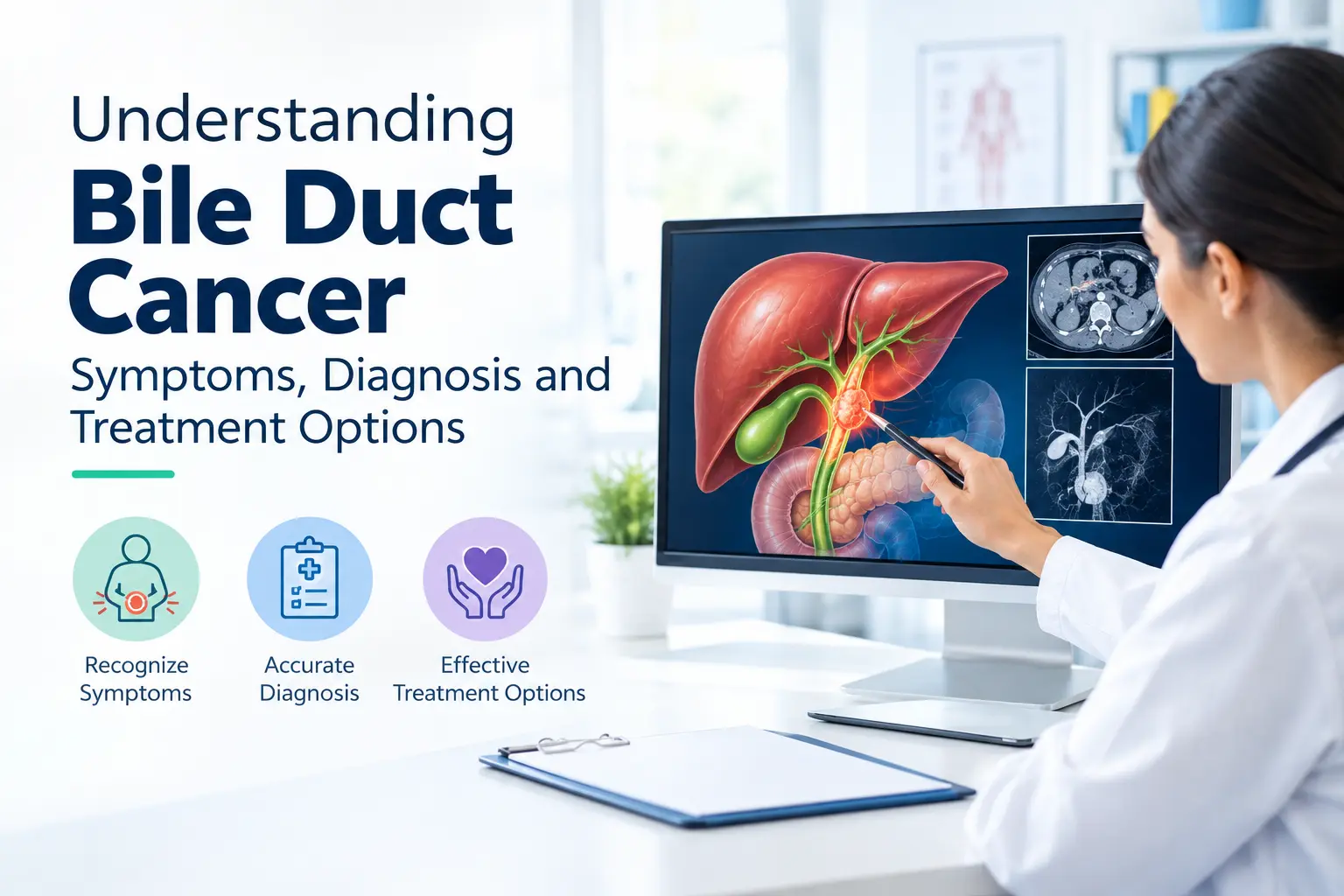
Bile duct cancer, also called cholangiocarcinoma, is a type of cancer that develops in the bile ducts. These ducts carry bile from the liver and gallbladder to the small intestine, where it helps with digestion. Although bile duct cancer is uncommon, early attention to symptoms and specialist care can make an important difference in treatment planning. Patients searching for Bile Duct Cancer Treatment UAE can benefit from understanding how this cancer is diagnosed and which treatment options may be considered. A Bile Duct Cancer Specialist Dubai can assess the location and extent of the disease and create a treatment plan based on the patient’s individual condition. What Is Bile Duct Cancer? Bile duct cancer occurs when abnormal cells begin growing in the bile ducts. It can develop inside the liver or in the ducts outside the liver. The location of the tumor plays an important role in diagnosis and treatment. There are several types of cholangiocarcinoma, and each may require a different treatment approach. Cholangiocarcinoma Treatment UAE may involve surgery, chemotherapy, radiation therapy, targeted therapy, immunotherapy, or a combination of treatments depending on the patient’s diagnosis. Specialized Hepatobiliary Cancer Care brings together expertise in cancers affecting the liver, gallbladder, bile ducts, and related organs. Symptoms of Bile Duct Cancer Bile duct cancer may not cause noticeable symptoms during its early stages. As the disease progresses, symptoms can develop when the tumor affects bile flow. Common symptoms may include: Jaundice is one of the more noticeable symptoms because blocked bile flow can cause bilirubin to build up in the bloodstream. However, these symptoms can also occur with non-cancerous conditions, so proper medical evaluation is essential. How Is Bile Duct Cancer Diagnosed? Diagnosis usually begins with a medical history and physical examination. Doctors may recommend blood tests to assess liver function and bilirubin levels. Imaging can then provide more detailed information about the bile ducts and surrounding organs. Ultrasound, CT scans, MRI, and specialized bile duct imaging may be used depending on the situation. A biopsy may also be recommended to examine tissue under a microscope. For people considering Bile Duct Cancer Treatment UAE, accurate diagnosis is essential because treatment depends on factors such as tumor location, size, spread, and the patient’s overall health. Treatment Options for Bile Duct Cancer Treatment depends largely on whether the tumor can be completely removed through surgery. When surgery is possible, the aim may be to remove the cancer while preserving as much healthy tissue as safely possible. When surgery is not suitable, other treatments may help control the disease, reduce symptoms, or slow its progression. Cholangiocarcinoma Treatment UAE is planned according to the patient’s specific cancer characteristics. Treatment Possible role Surgery May remove localized bile duct tumors Chemotherapy May control cancer cells throughout the body Radiation therapy May target cancer in specific areas Targeted or immunotherapy May be considered for selected patients Bile Duct Surgery Surgery can be complex because bile ducts are located close to major blood vessels and important organs. The type of operation depends on where the cancer is located. A Bile Duct Cancer Specialist Dubai may work with a multidisciplinary team to determine whether surgery is appropriate. In selected cases, surgery may involve removing part of the bile duct, liver tissue, or nearby structures. Bile Duct Surgery Dubai should be carefully planned using imaging and other diagnostic information. The surgical approach depends on the tumor’s exact location and whether it has spread to nearby or distant areas. Advanced Hepatobiliary Cancer Care When bile duct cancer is advanced, treatment may focus on controlling disease, improving symptoms, and maintaining quality of life. Stents or other procedures may sometimes be used to improve bile drainage when a tumor causes blockage. Modern Hepatobiliary Cancer Care can involve surgeons, medical oncologists, radiation specialists, radiologists, pathologists, and other healthcare professionals working together. For patients exploring Bile Duct Cancer Treatment UAE, this team-based approach can help doctors consider different treatment options at each stage of care. Why Specialist Evaluation Matters Bile duct cancer can be challenging to diagnose and treat because of its location and varied presentation. Specialist assessment helps determine the cancer’s stage and whether surgery or other therapies may be appropriate. A Bile Duct Cancer Specialist Dubai can review imaging, pathology, laboratory results, and medical history before recommending treatment. Patients may also be advised to undergo additional molecular or biomarker testing when it could help guide treatment. For suitable patients, Bile Duct Surgery Dubai may form an important part of treatment. For others, a combination of systemic therapies and supportive procedures may be considered. Frequently Asked Questions 1. What are common symptoms of bile duct cancer? Jaundice, dark urine, pale stools, abdominal discomfort, itching, fatigue, and unexplained weight loss may occur. 2. How is cholangiocarcinoma diagnosed? Doctors may use blood tests, ultrasound, CT, MRI, bile duct imaging, and sometimes a biopsy to confirm the diagnosis. 3. Is surgery possible for bile duct cancer? Surgery may be possible when the tumor can be safely removed. Suitability depends on its location, spread, and the patient’s health. 4. What does Hepatobiliary Cancer Care include? It may include surgery, oncology, imaging, pathology, systemic therapy, symptom management, and coordinated specialist follow-up. Conclusion Understanding the symptoms and treatment options for bile duct cancer can help patients seek appropriate medical attention sooner. Diagnosis requires careful assessment because symptoms may resemble other liver or digestive conditions. Cholangiocarcinoma Treatment UAE can involve different approaches depending on the cancer’s stage and location. For selected patients, Bile Duct Surgery Dubai may provide a surgical treatment option, while other patients may benefit from systemic or supportive therapies. Working with a Bile Duct Cancer Specialist Dubai and a multidisciplinary Hepatobiliary Cancer Care team can help ensure that treatment decisions are based on the patient’s diagnosis, test results, and individual medical needs.
Tags: Bile Duct Cancer Treatment UAE